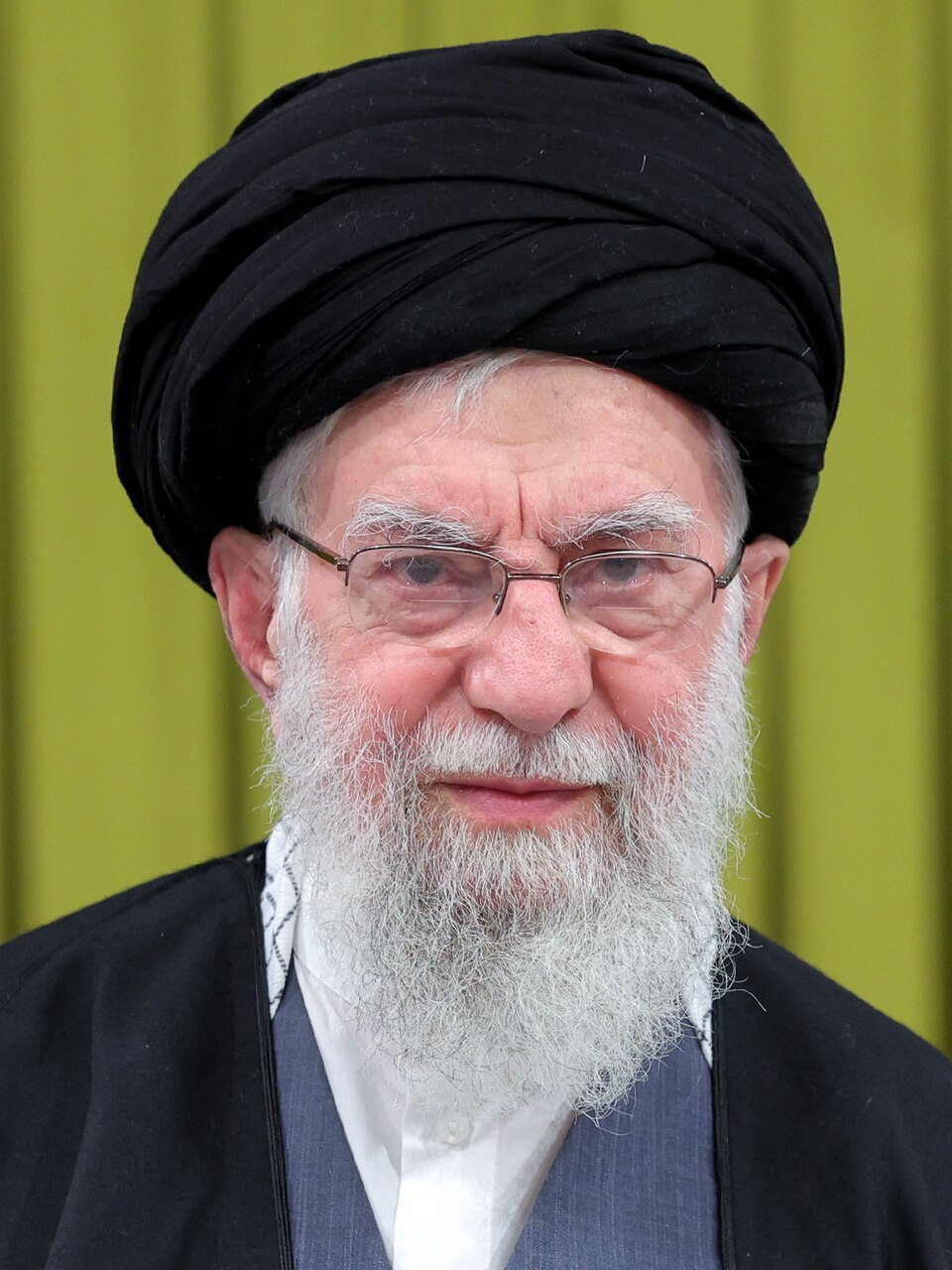
Khamenei's Iron Grip: Why Iran's Economy Lacks Real Security (Seguros)
In the complex political landscape of Iran, understanding the true locus of power is crucial to comprehending the nation's persistent economic struggles. While global headlines might focus on the actions and pronouncements of its elected president, such as Masoud Pezeshkian, the undeniable reality is that ultimate authority, particularly over strategic and economic policies, rests firmly with Supreme Leader Ayatollah Ali Khamenei. This centralized control, coupled with a highly volatile geopolitical environment, creates a profound lack of economic seguros—security, assurances, and stability—for the Iranian populace and its future. From devastating sanctions to internal power dynamics, the nation's economic suffering is deeply entrenched in a system where real power and accountability are fundamentally misaligned, often leaving figures like President Pezeshkian as a mere scapegoat.
The Supreme Leader's Unrivaled Authority and Its Economic Fallout
Ayatollah Ali Khamenei's position as Supreme Leader grants him overarching authority that transcends all branches of government, including the presidency. In the Islamic Republic, the president, while the head of the executive branch and directly elected, largely operates within the parameters set by Khamenei. This dynamic means that even well-intentioned reform efforts or crucial economic decisions made by the presidential office can be, and often are, overridden or undermined by institutions directly accountable to the Supreme Leader.
This centralization of power has profound economic consequences. It creates an environment where long-term economic planning and the implementation of consistent fiscal policies are incredibly challenging. Investors, both domestic and foreign, are hesitant to commit capital when the ultimate decision-maker is not directly accountable to public vote or subject to transparent checks and balances. The lack of predictable governance, compounded by the Supreme Leader's control over vast economic entities—often through the Islamic Revolutionary Guard Corps (IRGC) and various bonyads (foundations)—means that a significant portion of the national economy operates outside the purview of the elected government. This parallel economic structure lacks transparency, fosters corruption, and diverts resources from crucial public services and productive investments, directly hindering the creation of economic seguros for ordinary Iranians.
President Pezeshkian's Predicament: A Symbol of Powerlessness
President Masoud Pezeshkian's early tenure in office starkly illustrates the inherent powerlessness of the Iranian presidency. Despite campaigning on promises of reform and a better economic future, he finds himself in an unenviable position, often portrayed as a "lonely man" in Tehran. Just months into his term, reports suggest he's already losing support from former champions, caught between appeasing a hardline minority and the immense public expectation for change. Yet, even symbolic gestures towards reform are fraught with risk, as real power sits elsewhere.
Pezeshkian's struggles highlight how the presidency functions more as a lightning rod for public discontent than a true engine of policy change. When the economy falters, as it consistently has, the blame often falls squarely on the president, regardless of his actual capacity to influence key economic levers. Pezeshkian has, commendably, subtly but unmistakably laid responsibility for some economic woes at the feet of the Supreme Leader's policies. While not a revelation to the informed Iranian public, such an open acknowledgment from a sitting president is a rare act of political courage. However, this frankness also makes him a target for hardliners, who opportunistically use his willingness to engage with the West—a stance potentially approved by Khamenei himself—as a pretext to undermine his position. This political maneuvering further erodes any semblance of stability or seguros that the government might hope to project for the nation's economic future.
The Economic Quagmire: Sanctions, Institutions, and Elusive Security (Seguros)
Iran's economic crisis is multifaceted, but its deepest roots are found in two interlocking realities: a toxic foreign policy and an economic system dominated by institutions loyal to Khamenei. The nation's assertive regional posture and nuclear ambitions have led to crushing international sanctions, most notably from the United States. These sanctions severely restrict Iran's ability to sell its oil, access international financial markets, and import essential goods and technology. The result is chronic inflation, high unemployment, currency devaluation, and a significant brain drain as talented individuals seek opportunities abroad.
Adding to this external pressure is the internal structure of Iran's economy. As mentioned, vast sectors are controlled by powerful entities like the IRGC and various bonyads, which operate with limited transparency and often prioritize political objectives over economic efficiency. These institutions are largely immune to government oversight, creating an unlevel playing field for private enterprise and stifling innovation. This dual economic system means that even if a president like Pezeshkian were genuinely committed to economic reform, his administration would lack the necessary control and leverage to implement meaningful change. The lack of accountability within these powerful, opaque structures means there are no real seguros or guarantees for equitable economic growth, fair competition, or the protection of private property, all of which are essential for a healthy economy.
The recent geopolitical tensions, exemplified by operations like "Lion's Roar" and "Epic Fury" involving Israeli strikes targeting key Iranian figures and facilities, further exacerbate this instability. While the direct results of these strikes remain unclear, the constant threat of large-scale hostilities creates an environment of extreme uncertainty, deterring investment and making any long-term economic planning virtually impossible. For the average Iranian, this translates into a daily struggle for survival, with little hope for economic seguros or a predictable future.
Navigating the Future: Can Iran Find Economic Security (Seguros)?
The path toward a stable and prosperous Iranian economy, one that can offer genuine seguros to its citizens, is fraught with immense challenges. Real economic reform would necessitate fundamental shifts in both foreign policy and domestic power structures. Easing sanctions, for instance, would require a diplomatic breakthrough on issues like the nuclear program and regional interventions. Domestically, genuine reform would mean curtailing the economic influence of the IRGC and other loyalist institutions, bringing them under transparent government oversight, and fostering a truly competitive private sector.
For a president like Masoud Pezeshkian, the choice is unenviable: continue to appease the hardline faction that holds real power, or attempt to project an image of advocating for change, even if largely symbolic. The hardliners, for their part, have yet to present a credible alternative plan for rescuing a nation teetering on the edge of political and social unrest. Their strategy often boils down to blaming the elected government for crises rooted in their own policies, further obscuring the true obstacles to economic recovery.
Ultimately, any significant improvement in Iran's economic outlook and the provision of economic seguros for its people hinges on a reconciliation of its complex internal power dynamics and a re-evaluation of its foreign policy. Without these foundational changes, the cycle of economic suffering, blame, and elusive security will likely continue, impacting generations of Iranians and perpetuating a system that prevents its own potential from being realized.
In conclusion, Iran's economic suffering is not a mere consequence of presidential mismanagement, but a deeply embedded systemic issue. The true power of Ayatollah Ali Khamenei, combined with the crippling impact of international sanctions and an opaque, state-dominated economy, creates an environment devoid of economic seguros for the average citizen. While figures like Masoud Pezeshkian navigate their challenging roles, the fundamental obstacles to prosperity remain rooted in the centralized authority that defines the Islamic Republic, leaving the nation in a constant quest for economic stability that remains perpetually out of reach.